Workshop
Workshop on Artificial Intelligence and Agentic Systems for Cybersecurity -
CyberAIS
2027
26 February, 2027 - Valletta, Malta
In conjunction with the 19th International Conference on Agents and Artificial Intelligence - ICAART 2027
CO-CHAIRS

|
Slim Rekhis
Communication Networks and Security Research Lab, Higher School of Communication of Tunis (SUP’COM), University of Carthage
Tunisia
|
|
|
|
Short Bio
Slim Rekhis is a Professor of Telecommunications at the Higher School of Communications of Tunis (SUP’COM), University of Carthage, Tunisia, and Director of the Communication Networks and Security (CNAS) Research Laboratory. He received his Ph.D. and Habilitation degrees in Information and Communication Technologies from SUP’COM in 2007 and 2013, respectively. His research interests focus on cybersecurity and cyber defense, digital forensics, cyber deception, and the application of artificial intelligence to cybersecurity. His work also addresses the security of cloud computing, the Internet of Things (IoT), the Internet of Vehicles (IoV), cyber-physical systems, and connected medical devices. He has been actively involved in research projects, doctoral supervision, and international scientific collaborations in network and information security.
|
|
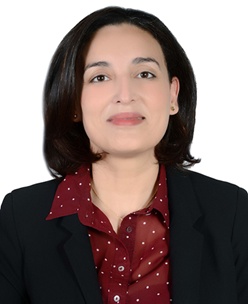
Nejla Essaddi
Communication Networks and Security Research Lab. Green and Smart Communication Systems Research Lab, University of Carthage
Tunisia
|
|
|
|
Short Bio
Dr. Nejla Essaddi is an Assistant Professor at the Higher Institute of Information and Communication Technologies (ISTIC), University of Carthage, and a researcher with the Communication Networks and Security (CNAS) Research Laboratory. She received her Ph.D. in 2011 for work on mobility schemes and communication models in wireless sensor networks. Her research interests include artificial intelligence, machine learning and deep learning, cybersecurity, IoT and wireless sensor networks, cloud computing, data analytics, and intelligent networked systems.
|
SCOPE
CyberAIS brings together researchers, engineers, and practitioners working on artificial intelligence and agentic systems for cybersecurity. The workshop focuses on AI-driven threat detection, security analysis, and autonomous cyber defense, covering the progression from intrusion detection and threat intelligence to security reasoning, digital forensic investigation, SOC automation, and coordinated incident response.
It welcomes research on machine learning, deep learning, large language models, reinforcement learning, and agentic and multi-agent systems, with particular emphasis on their application to intelligent security operations, adaptive defense, and automated decision-making. CyberAIS also addresses the security, robustness, explainability, and trustworthiness of AI-based defense solutions, including the challenges of deploying autonomous security agents safely and reliably.
The workshop welcomes original research contributions presenting novel methods, models, algorithms, architectures, and frameworks, as well as prototypes, datasets, benchmarks, and experimental studies that advance AI-driven cybersecurity and agentic cyber defense.
Application areas include enterprise networks, cloud and edge infrastructures, IoT and Industrial IoT (IIoT), 5G/6G networks, non-terrestrial networks (NTNs) and satellite communications, cyber-physical systems and critical infrastructures (including ICS/SCADA), connected and autonomous vehicles (IoV), unmanned aerial vehicles (UAVs), and healthcare systems (e-health/IoMT). Contributions addressing these environments are particularly encouraged when they advance AI-driven threat detection, security analysis, or autonomous cyber defense.
CyberAIS aims to foster collaboration between the AI and cybersecurity research communities across academia and industry.
TOPICS OF INTEREST
Topics of interest include, but are not limited to:
AREA 1: AI-BASED INTRUSION AND THREAT DETECTION
- Machine learning and deep learning for intrusion and anomaly detection
- Advanced detection of malware, botnets, and emerging cyber threats
AREA 2: AI-DRIVEN THREAT INTELLIGENCE AND SECURITY ANALYSIS, AND DIGITAL FORENSICS
- AI-assisted threat intelligence, threat hunting, and attack-chain analysis
- LLMs and retrieval-augmented generation for security analysis and reasoning
AREA 3: AGENTIC AI AND MULTI-AGENT SYSTEMS FOR CYBER DEFENSE
- Autonomous security agents and collaborative multi-agent architectures
- Agent reasoning, planning, coordination, and tool use for cyber defense
AREA 4: INTELLIGENT SECURITY OPERATIONS AND INCIDENT RESPONSE
- AI-driven alert triage, investigation, and SOC automation
- Agent-based response orchestration, decision-making, and automated containment
AREA 5: ADAPTIVE AND PROACTIVE CYBER DEFENSE
- AI-driven cyber deception and adaptive defense strategies
- Reinforcement learning and intelligent decision-making for proactive defense
AREA 6: SECURITY, ROBUSTNESS, AND TRUSTWORTHINESS OF AI-BASED DEFENSE
- Adversarial attacks against AI models, LLMs, and defensive agents
- Explainability, robustness, human oversight, and safe autonomous operation
AREA 7: EVALUATION OF AI AND AGENTIC CYBER DEFENSE
- Datasets, benchmarks, and cyber ranges for intelligent cyber defense
- Evaluation of detection effectiveness, autonomous decision-making, reliability, and operational performance
KEYNOTE SPEAKER
Legacy, Intelligent, and Agentic Security for Networked OT-Systems in the Era of Intelligent Cybercrime

|
Axel Sikora
Offenburg University of Applied Sciences, Germany
Germany
|
Short Bio
Dr. Axel Sikora is a full professor at Offenburg University, Germany, where he serves as Scientific Director of the Institute of Reliable Embedded Systems and Communication Electronics, a leading R&D institute for secure, safe, wireless, real-time, modular IIoT connectivity solutions. He also has been serving as deputy member of the board at Hahn-Schickard Research Institute for Micro and Information Technology from 2016 till 2025.
Dr. Sikora is active in several standardization activities around secure and efficient IIoT connectivity. Since many years, he is serving as chairman of the embedded world Conference, the world's largest event on the topic. In parallel, he is engaged in some deep-tech spinoff companies. He has authored and co-edited several textbooks, around a dozen of patents, and more than 350 scientific papers.
Abstract
These years see increasing geopolitical tension, increasing generative AI capabilities, and increasing safety requirements of autonomous systems, which leads to the massive need for security solutions. The keynote will give an overview on selected examples of cyberattacks on networked Operational Technology (OT) systems and describe the risks especially for intelligent and autonomous systems.
On the defense side, an increasing number of countermeasures can be observed. This includes integration of cryptographic protocols and of credential management into deeply embedded OT network protocols, like for PROFINET, CAN, Ethernet, Modbus or Wireless M-Bus, but also for optimized TLS-variants.
Of course, it is not good enough to only secure the communication protocols. We also need management of credentials and – above all – AI-based agentic Intrusion Detection (IDS) and Security Information and Event Management (SIEM)-systems. The keynote will report on actual research and development of all these topics with a special focus on the specific requirements of OT networks, taking into account the distributed (federated) nature of such networks, their limited resources, and their predictable traffic characteristics.
IMPORTANT DATES
Paper Submission:
December 3, 2026
Authors Notification:
December 21, 2026
Camera Ready and Registration:
January 8, 2027
WORKSHOP PROGRAM COMMITTEE
Walid Abdallah,
Aviation School of Borj El Amri, Tunisia
Giampaolo Bella,
Università Di Catania, Italy
Nihel Benyoussef,
University of Tunis El Manar, Tunisia
Adnane Cabani,
IRSEEM, France
Nesrine Kaaniche,
Telecom SudParis, Institut Polytechnique de Paris, France
Yvon Kermarrec,
IMT Atlantique, France
Rida Khatoun,
Independent Researcher, France
Yosra Lakhdhar,
University of Carthage, Tunisia
Maryline Laurent,
Télécom SudParis, Institut Polytechnique de Paris, France
Wojciech Mazurczyk,
Warsaw University of Technology, Poland
Aref Meddeb,
Faculty of Engineering University of Sherbrooke Sherbrooke, Canada
Mohamed Mejri,
Laval University, Canada
Henrich C. Pöhls,
Passau Institute of Digital Security (PIDS), University of Passau, Germany
Axel Sikora,
Offenburg University of Applied Sciences, Germany
Bruno Silva,
University of Beira Interior, Portugal
Maha SLITI,
University of Carthage, Tunisia
Hajer Tounsi,
University of Carthage, Tunisia
Mark Vella,
University of Malta, Malta
Wiem Zemzem,
University of Carthage, Tunisia
(list not yet complete)
PAPER SUBMISSION
Prospective authors are invited to submit papers in any of the topics listed above.
Instructions for preparing the manuscript (in Word and Latex formats) are available at: Paper Templates
Please also check the Guidelines.
Papers must be submitted electronically via the web-based submission system using the appropriated button on this page.
PUBLICATIONS
After thorough reviewing by the workshop program committee, all accepted papers will be published in a special section of the conference proceedings book - under an ISBN reference and on digital support.
All papers presented at the conference venue will be available at the SCITEPRESS Digital Library (http://www.scitepress.org/DigitalLibrary/).
SCITEPRESS is a member of CrossRef (http://www.crossref.org/) and every paper is given a DOI (Digital Object Identifier).